Pod szyldem Celer kryło się w początkowym okresie działalności tegoż projektu małżeństwo – Will Long i Danielle Baquet-Long. W ciągu czterech lat jego wspólnej aktywności muzycznej powstała niezliczona ilość płyt, na których para penetrowała z powodzeniem różne oblicza eksperymentalnego ambientu. Niestety – w czerwcu 2009 roku Danielle zmarła nagle na atak serca. Will nie zaprzestał jednak tworzenia – i przeprowadziwszy się z Kanady do Japonii opublikował do dzisiaj drugie tyle wydawnictw. W samym tylko 2012 roku ukazało się aż czternaście albumów firmowanych szyldem Celer.

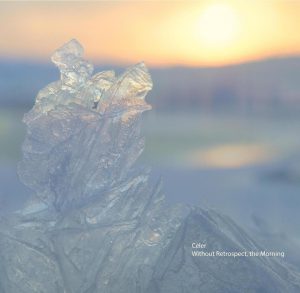
„Without Retrospect, The Morning” jest wśród nich wyjątkowy. Long zaczął zbierać materiał dźwiękowy, który nań trafił trzy lata temu, kiedy zimą pracował jako fotoreporter w kanadyjskiej południowej Albercie. Aura była wówczas niezwykła – często zdarzały się takie dni, że w ogóle nie widać było słońca za gęstej kurtyny opadającego śniegu, a mróz pokrywał swoimi rysunkami całe okna wynajętego domu, w którym mieszkał artysta. Long wziął ze sobą magnetofon z mikrofonem oraz kilka taśm wcześniej przygotowanych nagrań fortepianu i syntezatora. Dokonując terenowych rejestracji, miksował je na analogowym sprzęcie z przetworzonymi dźwiękami wspomnianych instrumentów. Potem wyjechał z Kanady – i dopiero dwa lata później przypomniał sobie o projekcie, dokonując jego ostatecznego miksu i masteringu w swoim nowym studiu w Tokio.

Materiał zamieszczony na „Without Retrospect, The Morning” podzielony został na na dwie części. Pierwszą tworzą krótkie utwory o impresjonistycznej urodzie, skoncentrowane na statycznych plamach przetworzonego szumu, niczym nasłuchiwane z ciepłego mieszkania dalekie smagnięcia lodowatego wiatru. To otwierający płytę „Holding Of Electronic Lifts”, a także późniejsze „A Small Rush Into Exile” czy „Variorum Of Hierophany”. Na drugi segment składają się majestatyczne kompozycje, bardziej rozbudowane, ukazujące kanadyjską zimę w pełnej krasie. Dziesięciominutowy „Dry And Disconsolate” owiewa nas chłodnym podmuchem świdrujących dźwięków, zza których wypływają oniryczne fale shoegaze`owych syntezatorów, podbite miarowo dudniącym dronem. Jeszcze bardziej minimalistyczny charakter mają „A Landscape Once Uniformly White” i „Distance And Mortality” – mrożąc słuchacza chmurnymi kaskadami monochromatycznych klawiszy. Pewne ocieplenie wprowadza dopiero „With Some Effort, The Sunset”, wnosząc w te lodowate dźwięki ledwo słyszalną melodię.

„Without Retrospect, The Morning” to arktyczny ambient w swej najbardziej radykalnej formie. Dlatego album Celera przypadnie do gustu przede wszystkim odbiorcom przyzwyczajonym do wymogów tego rodzaju estetyki. Ale takie potraktowanie muzycznej materii ma swój głęboki sens. Czyż właśnie nie w ten sposób wyobrażamy sobie podbiegunowe zimy na krańcach naszej planety?

Link

After waiting in production for several years, Mystery Sea has released the work ‘Seasick’ by Chubby Wolf, the solo project of Danielle Baquet-Long. I’m very glad for such a special release to happen for Chubby Wolf on such a great label.

Press release:
A mis-use of mistrust,
a clouted loop,
a taking under.
a view of islands hidden by a cloak of sea steam,
a loss,
a hidrotic tide.
Thus, I sigh at the sea, and
the sea sighed back at me.

– Danielle Baquet-Long
In a very short span of time and of creative obsession, Celer have managed to amass an astounding body of works…but this didn’t help to quench the thirst yet, and Danielle Baquet-Long, half of this symbiotic duo, under her wry moniker Chubby Wolf, sketched her own repertoire of twisted ambient patterns through spontaneous & diligent experimentation – this led to some brilliant discs, as for instance, “L’Histoire” on Gears Of Sand… Here on “Seasick” comes another of her sadly posthumous treasures, and it’s truly a pinnacle…some stirring ode to the immanence of the sea, and the ever shifting horizon strewn with ships going who-knows-where…
An imposing slow unfolding lament respectfully & subtly enhanced by Mathieu Ruhlmann’s mastering who dared to sprinkle Dani’s soundscape with aural debris giving the whole work a new aura & pertinent direction…

After all, Dani is still sailing…

In front of us,
a vertiginous sea,
submerged crevasses
frozen moments of uncertainty
that makes our hearts sink
into this solemn immensity…

And when we get closer,
It’s all ebullience,
an endless wash of disparate elements
pulled from a disintegrated cosmos…

So, we’ll leave this world,
as naked as when we entered into it,
just shot through by its piercing beauty & sly unease,
SEASICK, but somehow reconciled…

CD ltd to 250 copies
200 initial copies come with an additional art card on 300 gr satin paper

Link

Discourses of the Withered was originally released in 2008 and was the first proper release from Celer. In fact, the Norman Records review for the original 2008 release, notes with delight that Celer may release two albums that year. Little did we know. Here we are in 2012 and Infraction has re-issued the album as a limited CD with an expanded version of “The Separation of the Two-phased Apple Blossoms” and a previously unreleased track, “Retranslating the Upside-down Mountain”, which was from the Discourses sessions. Remastering duties are credited to Chihei Hatakeyama. What’s pleasing to see is the album is still as otherworldly and mysterious as it was in 2008.

Opening song, “This Thinking Globe Exploding”, comes at the listener in circular waves with the sounds drifting in and out of focus, almost like the soundtrack to watching an entire sleeping planet pivoting on its axis. It’s an incredibly confident first piece: barely moving, patient, yet always on edge. Something about the music is painfully human, yet also otherworldly.

Second piece “The Carved God is Gone; Waking Above The Pileus Clouds” begins with a synth swell that rises and then echoes off into infinity. It’s almost like the phrasing was designed to give us the lift of those spiked arpeggiated chords and then leaves a void so we can hear the vapour trail that comes after. It’s strikingly moving for such a minimal phrase. But, like that first composition, there is an almost airy, earthy feel to the music, as if it moves right through the listener. This pattern persists for so long that those synth chords begin to feel a vital as the air we breathe. Then other sounds enter: cold and mechanical, yet somehow driving home that essence rather than acting in conflict with it. Then the sound of human voices enters – are these protesters? The voices sound loud, resistant, defiant, as though in conflict. It’s an interesting subversion: humanity does violence to the mechanical world, not the other way around. Suddenly this calming song feels emotionally turbulent, uneasy. Immediately after, the song shifts completely. It’s an interesting spin: as if the human has interfered with the mechanical/technological world to create imbalance.

“The Stargazing Lily Lacks the Flower” evolves into something more fragile than the first two pieces. It is not built around the same feeling of waves hitting the listener, but feels like a pulse that blends highs and lows to capture the tension between the clinical and the emotional side of the text. There’s almost a sense of comfort despite these opposites in tension. Eventually the highs and lows merge to create something less tense and more naturalistic. It’s a wonderful drone that again feels vital, but somehow more human. Again, that tension between the achingly evocative and the coldly mysterious drives the album forward.

“Retranslating the Upside-down Mountain” is the piece of the puzzle that was added in for this re-issue. Interestingly, it is placed in the middle of the album. Usually those “bonus tracks” that come with a re-issue are tacked on at the end like the afterthought they actually are. But “Upside-down Mountain…” serves a purpose here – it makes that pattern of shifting closer than further from that human element more prominent. Specifically, the piece feels like a shift away from that human side to something almost alien and mechanical again. In a way, it’s a call back to the album opener – it’s that sensation of watching an entire world spin all over again. The next two compositions continue this pattern of finding the tension between the human and the otherworldly.

“Delaying the Entropy; In Emptiness, Forms Are Born” wraps things up with a slow wind down, as if the spectacle is ending. And, by now, those dichotomies of otherworldly vs. earthly and mechanical vs. human have come to some sort of balance. And how perfect is that title? You can almost see a Star Child orbiting as those final notes ring out; sure, maybe it’s not the triumph Kubrick painted it as, but it is a much needed rebirth.

And in many ways, that’s what Discourses feels like: the soundtrack to one of those existential space travel movies from the 60s or 70 s (think 2001 or Solaris). Yes, the stories were about a world of machines and otherness, but they also saw space and the technological world as a new plain for humankind to confront itself. They re-positioned the “final frontier” story lines to be about more than man conquering new landscapes, suggesting space was not some “other”, but an external manifestation of some mysterious corner inside of our humanity. But of course, all of this could be one person’s interpretation. The thing is that Celer’s music invites these types of interpretations, even today. Even if this re-issue had waited until 2020, Discourses would likely be just as vital as the day it came out.

Link

Picture the scene: time is suspended. You kiss the air like a jewel without. Knives round the corner. People are frozen, standing motionless before you. Their actions are as well, driven into the core of Earth like reversal of all that is infinite and known as infinite. This is a depressing situation – how do we rectify it? Mario Martinez might say each wound carried creationally has a healing field, an empowering component that honours its original organism to create the best outcome.

Look at where you’re manifesting the wound – you can get angry with shame, but what you feel then is humiliation? Look and think “What is the honourable thing to do?” Honourable consciousness is to respond to a shaming consciousness, and this kills the language of shame. Commitment, honour and loyalty through setting clear limits. and people generally don’t like joy; it’s a dangerous emotion. Inflammation of joy is caused by the shame brought from it, of another – knowing pro-flammatory products causes health to improve. Immunologically, people still sometimes die to protect the flag. But the reality is they’re only dead for a short time. And like the sea shore, the tide comes back in to thrive.

The “covenant of safety” is the thematic composite of Oh, Yoko’s “Seashore”, a 26 minute three-tracker released on Normal Cookie. The cover art depicts a small Japanese female reaching outside a car door, seemingly motionless besides arm-movement. Definitely, this is a good metaphor for Rie Mitsutake and Will Long’s music, seeing as these lull-isms have a reasoned resonance Sawako might aim towards, a cot-to-and-fro, “Seashore” unfurling its guitar with plink/plonk, casual indeterminancy that recalls Charles Hayward’s percussive rhythm dynamism, set to harmonic prop-petting beyond mast-iculation. Or: overarched grandeur of the emotional heft and transmogrified settings, which even on “Sprinkles Ambient Ballroom”, the duo don’t cut their slack too loose on what they’ve offered up. Which is bliss.

Normal Cookie as a label is new, a self-publishing music and art emporium, based in Tokyo, Japan, where Fluid regulars Will Long and Bvdub have visited in recent times. The final mix of “Seashore” here is fundamental to the child’s look – “Right just now you feel lost and confused”; “How do you know that?”; “I just do” the conversation passes on. With a solid shimmering 4/4 and choral tones backing the brigadeering, there’s a certain early noughties feel of electronic Plaid and Pilote that runs through these compostions. Quietly soaring and purposeful, Oh, Yoko show us where manifesting the wound is as much an exercise in condemning the absolute, as it is about ‘sound baggage handling’. In other words, we avoid the new at times because the old has more of an astute blend of influences; it doesn’t meek.

“I learned… that to condemn others is a grave mistake, since hatred, and even the wrong kind of criticism, is an evil which recoils upon its author and poisons every human relationship.

That does not mean we should be blind to the weaknesses or wickedness of others, any more than to our own, but that we should learn to look at them as the limitations of birth and circumstance, limitations which it is our duty to help them rise above. In this I have found that example and service are more helpful than advice or preaching.” ~ Margaret Bondfield, What Life Has Taught Me.

Link

A new benefit compilation has been released, and I have contributed a track to it. Here is the press release, where you can read more about it:

“This colossal compilation has been curated by Headphone Commute to benefit all of those affected by Hurricane Sandy, the largest Atlantic hurricane on record, which has devastated portions of the Caribbean, Mid-Atlantic and Northeastern United States in late October 2012. 100% of all the proceeds generated from the sale of this album will be donated towards two charitable organizations: Doctors Without Borders and The Humane Society. The artists on the release have been hand-picked to showcase the world’s top talent in ambient, modern classical, and experimental music. The unprecedented selection features many unreleased pieces composed exclusively for the cause.”

The Celer track is #86, and can be heard here: http://headphonecommute.bandcamp.com/track/drowned-melody

The entire compilation can be streamed and purchased here: http://headphonecommute.bandcamp.com/album/and-darkness-came

Thank you for your support of this compilation!


We’ve documented the heartfelt ambient excursions of Will Long before, but as the skies seemed to have permanently greyed over in NYC and we spend more time on the road or indoors with our music, now seemed an appropriate time to revisit his work. Perfectly Beneath Us, a forthcoming release on Russian imprint Still*Sleep, was recorded in Celer’s current hometown of Tokyo earlier this summer. For those of you unacquainted with the subtle, patient nature of Long’s productions, this release should provide an ideal entry point.

“Slightly Apart, Almost Touching” interweaves layers of tones to evoke alternating sentiments of melancholy and wonder, often at the same time. It’s layers unfold like not unlike the rolling farm fields that are depicted on the cover of the release…the transcendental quality of the song feels like it could go on for days, and pause time in the process.

Two shorter tunes with rising low-end levels connect the slowly gusting melodies of ”Slightly Apart, Almost Touching” to the release’s end-piece, ”Absolute Receptivity of All the Senses”. There’s a noticeable shift between the start and end of the EP, the air pressure seems to have lessened and a feeling of resigned comfort have replaced the blissfully wavering stasis of the opener.

Link

Un disco di Will Long su una delle migliori etichette italiane della scena ambient: anche a scatola chiusa, tripudio di applausi. Il motivo? Semplicemente, la Glacial Movements Records, avviata sei anni fa da Alessandro Tedeschi – noto anche come Netherworld – è sinonimo di garanzia in termini di scelta degli artisti – da Rapoon a Lull, passando per Skare, Aqua Dorsa, Stormloop, Pjusk, Oöphoi, fino ai nomi, per così dire ‘maggiori’, quali Francisco López, Bvdub, Loscil e gli ottimi Retina.it – per le proprie uscite, qualità audio e packaging curato e mai banale. Rifugiatosi a Tokyo, Celer, dopo la morte dell’amata moglie Danielle Baquet-Long a.k.a. Chubby Wolf, ha continuato a produrre da solo musica a oltranza e “Without Retrospect, The Morning” (2012) fa, infatti, parte di una trilogia ‘acquatica’ già avviata in precedenza, le cui registrazione risalgono all’inverno del 2009 quando lavorò come fotografo in Canada. Tra drone, field recordings e suoni sempre astratti e quanto minimalisti e sperimentali, nulla è mai fuori posto. Sublime.

Link

Quello tra Alessandro Tedeschi e Will Thomas Long era un incontro in qualche modo inevitabile, per la genuina passione con la quale entrambi interpretano la loro attività creativa e per la loro inclinazione a trarre ispirazioni da elementi naturali o atmosferici.
Non poteva quindi trovare miglior collocazione dell’etichetta romana Glacial Movements, dedita all’esplorazione di un isolazionismo ambientale ghiacciato, il terzo capitolo della trilogia a tema acquatico di Celer, che già si era manifestata in “Cursory Asperses” e “In Escaping Lakes”.

Dunque il ghiaccio quale trasformazione dell’acqua, così come il suono quale variazione infinita dell’interazione tra elementi, quando non prodotto della spontanea interazione tra field recordings e oscillazioni minimali che lambiscono il silenzio o lo smuovono flebilmente.

Opera breve, almeno per i suoi monumentali standard (“appena” cinquantadue minuti), ed estremamente delicata “Without Retrospect, The Morning” è incentrata sulle frequenze più basse del ghiaccio, della neve e del vento, catturate in occasione di un soggiorno di Long nello stato canadese dell’Alberta, nel corso del quale ha altresì lavorato registrazioni di piano e synth, riducendole a un’essenziale stato gassoso attraverso filtraggi e prolungatissimi delay.

Ne risultano segnali sonori inafferrabili e quasi del tutto uniformi, tanto da richiedere un ascolto a volume elevato per poter cogliere le impercettibili variazioni di suoni che per buona parte del lavoro stentano quasi ad essere percepiti come tali. Sarebbe decisamente ridondante, in proposito, interrogarsi sul senso ultimo di una simile operazione ed è ben possibile che, nel farlo, qualcuno possa giungere a conclusioni recisamente negative; tuttavia, una volta poste in relazione le risultanze auditive con le finalità concettuale ad esse sottese, si può ben dire che “Without Retrospect, The Morning” adempia appieno la missione di restituire in forma sonora le sensazioni atmosferiche che ne costituiscono l’essenza più profonda.

Ciò avviene tanto nel soffio leggero di “Holdings Of Electronic Lifts” e nella nota risuonante di “A Landscape Once Uniformly White” quanto nelle dense saturazioni di “Dry And Disconsolate” e “Distance And Mortality”, le cui torsioni droniche si inarcano in sibili in moderato crescendo. Quando poi si giunge ai conclusivi tredici minuti di “With Some Effort, The Sunset”, l’uniforme coltre nevosa si colora di riflessi aurorali, aprendosi con incedere narcolettico alle suggestioni più fuggevoli dell’ispirazione di Long.

Che se ne colgano i profili formali di opera certamente non incentrata su variazioni significative o ci si lasci avviluppare dalle sue frequenze ipnotiche, “Holdings Of Electronic Lifts” adempie comunque alla sua missione di colonna sonora di neve e vento, evanescente e sottile come gli elementi che l’artista californiano – che, ironia della sorte, sostiene di detestare il freddo – ha provato a trasformare in suono.

Link

In 2008, while on my bike, I was unlucky enough to get hit by a car running a stop sign down the street from my house. Sadly, it’s pretty typical in such a congested area that was built when people were more worried about being run over by horse carriages careening down the street at a then-godforsaken seven miles an hour. Some notable things changed for me of course, but to be honest, the ultimate result of learning to cope with the lasting effects of being hit by a car has been to lend me a much better sense of humor about coping in general. Most of the time it’s pretty instinctive; when you think about it, we’re all coping, all broken in our own ways. Duh. If we all knew that we were seeing everything the same way, what would be the point? I may not really remember what some things taste like, I get particular smells stuck in my sinuses for weeks on end (please, Jesus, let it be nutmeg again this time and not city bus B.O.), and I don’t hear much outside the range of low frequencies in my left ear, but in all honesty, I could hardly care less. Did you know Brian Wilson was partially deaf?

Anyway, the point is this: there may have been a time when I was very concerned with experiencing music correctly, but these days, in the wake of learning to hear things again in my own fashion, I can hardly think of something more preposterous. Are we really trying to tell ourselves that everyone isn’t hearing everything a little differently? Certainly, there is enough consensus to go on for the sake of crafting some temporary standards of audio quality, but to be realistic, they should be viewed as the momentarily useful appraisals of technical precision they are—and really, most music that prescribes to those fleeting laws of “true listening” just isn’t very interesting. All this to explain why I enjoy music like that made by Celer’s Will Long so much: the idea that there is an objectively ideal way to hear something is about as silly as saying there is a simple definition for a good painting. And given the fact that the promotional material for Celer’s recent I, Anatomy LP includes the phrase “[the record] isn’t a story, it’s a hundred stories,” I think it’s safe to assume that Long understands where I’m coming from.

I, Anatomy reminds me that incidentals and eccentricities are simply inherent to the listening process. No one will ever hear even the most well-produced record the same way twice if only for the dynamics of earwax, so why even attempt to embody the possibility? You know someone is just gonna upload all of your records to sendspace at 92kbps and spam the whole world, and it’s a bummer that you can’t control how everyone hears your music every time, so why not open the process up to those incidentals, magnify them in a sort of intentional overload? As a whole, I Anatomy is characterized by elusive, dense layers of sound and self-obscuring composites that create a sort of pleasurable lack of being able to discern individual elements. The effect is a common one in my experience of intriguing ambient music, which is what I’ll call Celer’s brand: always questioning the “truth” of the sound at hand. I love that it forces me to constantly ask if what I’m hearing really is what I’m hearing.

Celer’s brand is almost too idiosyncratic to be open to interpretation, as the band’s history (which now finds Long based out of Tokyo) has been subsumed almost fully by somewhere around thirty hand-made, self-released pieces, as well as a personal tragedy that left Celer as a solo act. Yet, it’s almost impossible at any point in I, Anatomy to separate the soundscape into any constituent parts, into any specific emotions, which, while not being exactly groundbreaking for this genre, is made a very interesting focus in execution. What we hear is not necessarily a discernible “collection” of distinct sounds so much as the barely visible, vaporous apparitions that flash and hum in the midst of the foggy intersection of so many colliding atmospheres, like the mysterious ring that echoes from inside your head in the midst of too many thrumming appliances. Celer posits that mysterious ring as a sort of instinctive harmony, an opportunity as presented by the endless variation of individual biology to experiment with the possibilities of individualized experience—and those moments of mysterious, transcendent resonance are many. When we start to think about how unique each person’s internal soundsystem may actually be, we start to truly explore the sonic possibilities of this kind of strategically dense ambient composition. That obsession with the mechanics of interpretation, and that desire to push music past the realm of strict objective listening standards, are the things that have always excited me about music like this. It may be a bit of an obvious statement about ambient music to say that it’s particularly well-equipped to address these chameleonic aspects of sound, but the ways in which it stands out on I, Anatomy make it worth mentioning.

Thanks to these qualities in particular, I, Anatomy maintains a sort of irresistibly intense gravitational pull. There always seems to be some barely-there sound haunting the furthest edges of the oscillating landscapes, plumes of ghostly electrical voices rising and fading before you can really get a hold on them. And it’s that feeling, of being drawn into a vibrating sonic black hole—ever deeper into what first appears to be a simple two-dimensional space but on closer inspection begins to pull the ear ever further in toward it’s crushing center—that buoys the record’s unassuming victories. The search for those mysterious undertones becomes an immersive, even hypnotic experience, and gives I, Anatomy a subtle depth that’s sure to keep a listener happily questioning what might be the next time through. Tracks roll like charged molasses, from ringing, ELEH-style minimalist tundras to bursting walls of treated Hecker-esque strings, but never seem to leave behind that coy invitation to go with the flow, to make something positive out of an irrational fear of tinnitus. That coping, after all, is only natural.

Of course, I’m sure a lot of effort went into recording I, Anatomy clearly and to the best technical efforts of those involved. But what really hits home in the end is that the idea of hearing something specifically crafted for rigid, repeatable, reliable clarity doesn’t seem like the point. It’s almost as if Long would be very pleased to discover that your friend heard something completely different when you played his record for them. If two composers sat down to reproduce tunes from the record by ear alone, I think the difference in their arrangements and harmonies would be effectively astonishing.

I’m reminded more than a little of Ryoji Ikeda’s landmark LP +/- (1996), which of all the records I can think of that display this quality, probably does it most directly and succinctly. Ikeda’s masterpiece was presented to me as an environmentally adaptive listening experience, or one that would shift and change based on my position relative to the sound and the listening space, and it is still, to say the least, an ah…ear-opening experience in regards to exploring the incidental possibilities of sound. From that point on, I just had a much harder time accepting music that didn’t take those elusive qualities of sound to heart in some way. So I’ve got to thank Mr. Long for validating me in a small way there. I no longer lament my inability to hear things the same way that someone else does, but rather enjoy making a point of celebrating my own unique cipher as much as possible. I, Anatomy might just do the same for you, too.

Link
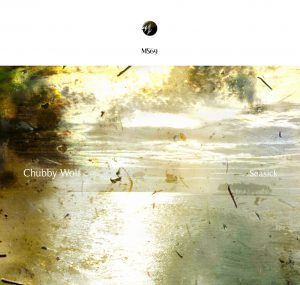
In the winter of 2009, I spent two months living and working a short-term job in photography and surveying in South Alberta, Canada. Aside from the job, it gave me the opportunity to work further on Without Retrospect, the Morning, the final part of the water-themed trilogy of albums that included the previous releases Cursory Asperses and In Escaping Lakes. Some days the snow would be so heavy the sun would never show, and ice covered the windows in the mornings. The wind rushed up the banks of the nearby mountains, and whipped against the buildings.

I had brought with me two Sony Tapecorder open reels, and a box of tapes of recordings from the past six months of piano and synthesizer. Using an endless delay system between the two open reels, I listened, layered, cut and pasted the tapes over time. Playing them out loud on the built-in speakers Tapecorder created a new type of texture, from combinations of the ice cold temperatures heated only by the room gas heater, reused tapes, and the decayed quality of the old speakers. After mixing and processing the tapes with microphone and contact microphone recordings of the ice, snow, and sub frequencies of the wind, the cracking and crunching sounds, both high and deep, seemed to appear naturally in the tape. The sub bass widened, and the mid range became thin and fragile.

For more than two years the recordings remained untouched, until recently, now in Tokyo, they were mastered, and recorded to new tapes. The affects of the cold, the sudden sunsets through the snow, and the night winds still stay in my mind, like a soundtrack to those two months, not without their own songs of loneliness but with also beauty, sounds seeming like a siren, embracing every unchangeable and otherwise forgetful moment, even in the bitter winter. CD edition of 300.

Available from Glacial Movements