The 2013 Yule soundtrack in the house has been four tracks of warmly soothing, nearly motionless soundscapes, somehow circumscribed by two contrasting descriptions of flight condition in the record’s presentation. One is by Will Long himself; the other (dated 1960) by an older namesake, perhaps a relative, but we’re not sure. Both are characterized by highlighting the immenseness of what was being seen by the writers outside the aircraft. All of the above, executed and/or penned by someone else, might have risked sounding like some kind of ethereal cliché. Not when Celer is involved, though: the improbably productive current Tokyo resident (who, incidentally, is soon becoming a dad – best wishes!) has a real knack for lubricating the internal mechanics of an absorptive “evolved ambient” buff with extremely attenuated tones inside processes of minute-gradation changes. The relatively uncomplicated evolution of the whole is largely grounded, or “clouded” shall we say, on low-keyed washes of rather snug reiterative sequences disclosing beautiful tenuous tints, now and again reinforced by stronger components which – on a close inspection and by raising the volume – caused the looser ends of my room to tremble. This notwithstanding, the most important aspect lies in the soporifically rewarding “presence/absence” of this particular record, a nerve-numbing acoustic treat for meditative, or merely absent-minded settings. Climbing Formation may constitute an ideal choice for underscoring the unequivocal vaporization of the festive scents we used to experience as children and right after, nowadays entirely gone in soulless unconcern. And – what’s even badder – without an inch of yearning on this side.
Posts from the Celer Category
Choose another category?
‘Without Retrospect, the Morning’ in Ambient Exotica
Without Retrospect, The Morning is Celer aka Will Long’s snow-covered and glacier-depicting audio shard on Alessandro Tedeschi’s Glacial Movements label, released in December 2012 and available to purchase and stream at Bandcamp. The label is an astute place for Long’s seven synth- and organ-driven Ambient tracks, the front artwork does live up to the selected material. And this time, the concept of selection and singling material out in order to form a cohesive work is much more meaningful than expected, as the album is recorded over the course of two years, from 2009–2011, and in four different locations, crossing borders of seasons, states, countries and oceans. Such a strategy contains certain risks: how can a wintry grace or icy isolation be properly constructed if the material is created in-between different projects and work phases, revisited only arbitrarily without the focus of a definite goal which is eventually called Without Retrospect, The Morning much later? Turns out that this album is – bar one exception – terrifically coherent, concentrated and a true-bred addition to the Glacial Movements catalog. Celer’s impression of winter does match the listener’s expectancy via frosty synth funnels and snow-covered sylvan organ washes, but these are only textures. The timbre, meanwhile, is twofold, comprising yearning undertones and moments of utter loneliness. Without Retrospect, The Morning sparkles nonetheless, as if it wanted to turn around the influence of its droning molecules and stretched vesicles. It therefore offers a great opportunity to be reviewed in-depth as part of my Winter Ambient Review Cycle 2013. And this opportunity turned into reality.
Cautious brightness, vestibules to sun-dappled times, a glazed moiré as implied by the softened sine overtones that are equipollent parts of the light blue organ fluxion: Holdings Of Electronic Lifts is a beautiful Ambient vignette of three and a half minutes, eminently bright yet archetypically Celer-like. It contains a distant New Age tonality, but the synths – or processed stringed instruments – are emaciated, purposely desiccate in order to showcase the hibernal tendency depicted in both the front artwork as well as the overall aesthetic topic of the Glacial Movements label. Meanwhile, one of the most interesting synergies is presented in A Small Rush Into Exile in which Will Long presents both a self-imposed forsakenness and the resulting elation that comes with it. Therefore, it so happens that a haunting mélange of eldritch-elasticized icicle complexions (complete with dissonant sinews) clashes with poignantly fragile segues of euphony and contentment. In the end though, this titular small rush is carved out well, unleashing a stern moment of isolation in a dark cavity.
Said dark cavity is ostracized in the following composition which turns into a crystal antrum. The title Dry And Disconsolate may hint at a diametrically opposite mood range, but the resulting piece of over ten minutes not only is a glacial and moist one, but also resting peacefully in itself. This tranquil peace, notwithstanding the soothing opening phase, is not a given. Helical polar beams pierce through a wraithlike – and comparably wadded – synth fluxion whose whitewashed, silky gentleness even reduces the recurrent tension and pressure that is spawned by the simultaneity of the undulating layers. Said tension is further augmented by an oscillating low frequency undercurrent which adds an aerose gravitas to the argentine loftiness. Dry And Disconsolate turns out to be one of the fully fleshed out tracks. It is even enthralling, but the stringency of the seemingly incompatible and fighting forces or timbres makes it a paradoxical hybrid of portent awash with light. On Variorum Of Hierophany, Celer fathoms another dichotomy in one of his iciest tracks: a warbled and strongly intrinsic aeriform ice floe towers above an ethereal river of Detroit-compatible luminosity. Fir-green, strangely thermal and therefore unexpectedly warm, its amicability is severely perturbed by the flying sine siren. Both layers are disconnected, yet cross-pollute their respective presence.
A Landscape Once Uniformly White follows, a strikingly peaceful track with no antagonistic antipodes or antimatter sewn into its plateau. This is the Drone track of the album, and although Will Long is not particularly fond of this overused genre depiction, this vitreous artifact is certainly droning, but benignantly so. In lieu of incisive sine strings, mellow rivulets and billows are floating through a particularly dark and quiescent backdrop of blackness. A Landscape Once Uniformly White breathes and exhales tranquility and slivers of enigmatic wonders. It lives up to the wintry theme and rewards listeners who turn up the volume; since there is no bass aorta traversing by, the pristine purity of the synth formations can freely expand and emit the microtonal granularity and different shades of the surfaces. What is amiss here is then moulded into Distance And Mortality, a downright pompous arrangement of rubicund strata. Heavily wafting bass protrusions cause a mephitic air, polyhedron beams mercilessly illuminate the scenery with their oppulent incandescence. I am tempted to guess that this piece comes from a completely different recording session. Previously, cacophony and dissonances were easy to digest, as the partaking elements were whimsical, lightweight and frosty, but the sheer strength and power of the organs triples the tension. An almost histrionic addition, with its dimension emphasized via the exclamation mark at the end of this very sentence! The long-form finale With Some Effort, The Sunset pays homage to the album title both grammatically and semantically and ends the album with a wonderfully somnolent, carefully balanced blending of iridescently plinking fractals, silver streams of wondrousness and purity as well as hidden but detectable traces of harmony and glee. While not being joyous per se, this last illuminant enshrines a certain joy in-between the cold coating of ice shards, frost and crushed snow.
It could be the case that Without Retrospect, The Morning was never meant to be released in this particular form and with Alessandro Tedeschi’s Glacial Movements label in mind. There are certain hints sewn outside the music-related boundaries. Firstly, and as mentioned in the first paragraph, the recording timeframe spans about two years, from 2009–2011, with all their springs and summers and whatnots. Secondly, the tracks were created in four different locations – California, Mississippi, Alberta, and Tokyo –, with the last of them, as fans of Celer know, being the “interim-final” destination of Will Long’s restless voyages. These biographical and production-related facts neither spoil the album, nor are they detectable in the ambiance itself. Except for the comparably gargantuan Distance And Mortality, every vignette and 10+ minutes piece sports and emanates the same frosty color range and comprises of identical, therefore consistent textures and patterns. Will Long’s knowledge as a curator is as refined as his composing skills, and indeed, both of them are needed on this album… and grant its very existence. Despite the various periods, seasons and cities, the common denominator is the transformation of winter in all its glory into shimmering Ambient music. Cold and situated in sub-zero climes, yet never exclusively crestfallen or dark, Without Retrospect, The Morning is a glitzy work full of prolonged coruscations and a solemnity which exchanges glistening particles or other pointillistic devices for wave-like, serpentine spheres.
‘Radish’ in maeror3
Становящийся в наш суетной век все более редким (а отсюда и все более желанным) явлением, дневной сон имеет существенные отличия от полноценного ночного отдыха. На фоне череды порой очень даже последовательных видений, порожденных спящим подсознанием, дневной «отдых разума» наполнен, как правило, фрагментарными вспышками неуловимых образов, выхваченных из окружающей реальности, приобретающей сюрреалистические оттенки, но оставляющей за собой ощущение некоей «незыблемости» бытия. Впрочем, многие эту точку зрения наверняка оспорят, ведь сон – дело сугубо индивидуальное. Но вот Уилл Лонг, создающий сейчас единолично произведения для «Celer», почти наверняка согласился бы со мной – надеяться на это позволяет недавно вышедший альбом «Radish», где как раз и собраны треки, с помощью которых Уилл постарался описать свои дневные сны.
«Radish» – работа без четких структур и границ. Без объяснений, обещаний и сложных концепций. Просто семнадцать коротких зарисовок, неожиданно начинающихся и не менее неожиданно заканчивающихся. Продолжая реализовывать идею «бесконечных короткометражек», представленную когда-то на дисках «Nacreous Clouds» и «Capri», Лонг словно бродит по квартире в сомнамбулическом состоянии, прислушиваясь ко всем окружающим шумам, проходящим через фильтр заглушенного сознания и предстающим в голове слушателя нереальными объектами, потерявшими привычные очертания и обильно приправленными инграммами, гештальтами, мыслями и воспоминаниями, сливающимися в блеклую, размытую картинку. Поэтому в дело идет все: уличный шум, гул водопроводных труб, бормотание телевизора и звуки бытовых предметов. Несколько композиций хрупки, как звон хрустальных бокалов, некоторые – массивны и тяжелы; одни стелятся ментальным грузом, другие массируют мозг тонкими и нервозными («Celer» всегда ими умело манипулировали) высокими и нарочито грубоватыми частотами, несколько же треков-крупиц этого затейливого калейдоскопа весьма легки, нежны и эфемерны, как волна тепла, обнимающая тебя, когда веки закрываются и жаркий летний полдень уходит на второй план, уступая место видениям куда как более интересным, мягким и уютным.
Слушать «Radish» строго рекомендовано именно в таком состоянии. И лучше на повторе. И хорошо бы отложить его еще и на ночное время, чтобы отгонять тяжелые сны, обитающие в неизбежно нагрянувшей темноте.
‘Climbing Formation’ in Music Won’t Save You
Tralasciate per un attimo le nuove e per certi versi sorprendenti derive innestate con i suoi due nuovi progetti Rangefinder e Oh, Yoko, Will Thomas Long ritorna all’abituale alveo di Celer con uno dei lavori più evanescenti ed eterei tra i cento e oltre pubblicati negli anni sotto tale denominazione.
L’idea sottostante all’ora abbondante di soffi ambientali, articolata in quattro tracce, della quale si compone “Climbing Formation” nasce a mezz’aria tra terra e cielo, tra i riflessi di un tramonto senza fine, inseguito da Long nel corso di un viaggio aereo che lo riconduceva all’attuale residenza giapponese.
Calda e vaporosa è appunto la consistenza delle undici “concatenazioni” che formano le quattro pièce, dilatati frammenti generati da organi, synth e loop assortiti, espansi fino a sublimare bagliori corruschi cristallizzati in una durata, al solito, imponente ma in questo caso fedelmente rappresentativa della placida narcolessia di iterazioni e graduali punti di snodo di composizioni le cui frequenze subliminali a volume elevato rivelano l’incessante moto degli elementi di un’atmosfera impalpabile.
Presence and Absence, a t-shirt

Design and silkscreening by Satoshi Ogawa
‘Radish’ in Music Won’t Save You
L’ennesima pubblicazione della sconfinata discografia di Celer può rappresentare l’esempio perfetto per smentire i luoghi comuni tanto sull’immediatezza creativa di opere sperimentali quanto sulla magniloquenza espressiva sottostante alle frequenti lunghe sinfonie ambientali di Will Thomas Long. “Radish” consta infatti di ben diciannove brevi tracce prive di titolo, contrassegnate soltanto dal loro numero progressivo ed elaborate nel corso degli ultimi due anni a partire da frammenti strumentali, field recordings, suoni e rumori dalle matrici più disparate.
L’incessante successione delle tracce, sostanzialmente antitetica al loro essenziale contenuto, offre una sensazione di continua mutazione delle istantanee in movimento di Long, che disegnano una sequenza mutevole tale da restituire nell’ascolto lo stream of consciousness nel quale è stata compilata. Come la concisione di respiri che si avvicendano spontaneamente l’uno dopo l’altro, i diciannove brani mostrano una tecnica di impressionistiche suggestioni sonore, talora prodotte da frequenze e rumori appena al di sopra del livello della percezione e quasi solo nei passaggi relativamente più articolati (due sole tracce superano i cinque minuti di durata) sviluppate in minute partiture di placido ipnotismo ambientale.
Pur rinunciando a lavorare sulla persistenza, Long non ha depotenziato il contenuto immaginifico delle sue creazioni, quanto piuttosto ha inteso cristallizzare il fascino degli elementi più volativi di un descrittivismo emozionale costituito da un pulviscolo di brevi schegge sonore, la cui valenza in questa forma viene anzi esaltata.
‘Gau’
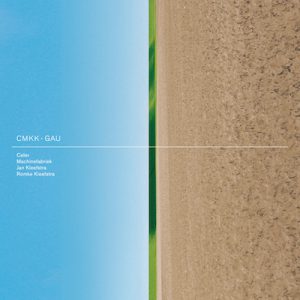
In March of 2012, nearing the end of a tour together through the Netherlands and Belgium, Celer, Machinefabriek, and Jan and Romke Kleefstra gathered in a country studio, spending an afternoon improvising to record Gau. Recorded by the old hardcorerocker Jan Switters at the Landscape studios in Gauw, situated in the countryside in the midst of Friesland, the place was surrounded by green fields with idle tractors, few trees, buzzards and only massive farmhouses dotting the horizon. From the almost four hours of original studio recordings, later mixed down in Rotterdam by Machinefabriek, this somewhat more then 40 minutes, titled Gau, represents the highlights of an afternoon, with coffee and orangecake, in the isolated Frisian countryside. Gau is a Frisian word that means in a hurry or fast, but is also the Frisian notation of the village name where the studio is located.
Available from Monotype Records
‘Climbing Formation’ in Ambient Exotica
Climbing Formation is a four-track album by Tokyo-based Ambient luminary Celer aka Will Long, comprising of eleven concatenations – or rather formations – realized via an organ, a synthesizer and various tape loops and movements. Released on the Parisian Entropy Records in mid-September of 2013, the CD comes in an edition of 500 deluxe matte-colored digipaks and with a limited postcard. It can be ordered directly from Entropy Records and is fully streamable at Will Long’s Bandcamp site. As with all of Celer’s releases, the artist creates a textual backdrop which could be coined as a cheeky faux-clarity; it seems to explain everything one ought to know about the respective work, but is abstract enough to not be served on a silver platter. Climbing Formation is no different in this regard and is potentially easy to understand due to the explanatory notes and the front artwork. Not entirely coincidentally, the unison of front artwork, album title and accompanying text offers the first designed dissonance. Climbing Formation is usually connected to rock climbing and the ascent of said formation, but the front artwork does not show illustrate the flimsiest barrow. It is a US Air Force jet that is shown, probably photographed in motion. The liner notes absorb – and rigidify – the leitmotif of aeronautics: two different travelogs are contrasted, the first written by one William A. Long, Jr. in Fairbanks, November 1960 while being on a plane in order to “oversee a polar station in the middle of nowhere.” Whether this is a relative of Will Long or a namesake is not revealed (yellow press anyone?). The second travelog is written by Celer himself during a flight to Tokyo as he lets his mind drift: “I keep watching out the window, continually sucked into the sunset, and the distant mountains of clouds hanging over the ocean.” Mountains and airplanes are thus the main theme of the album, but the reviewer’s prerogative of interpretation is still in danger as the unfolding arrangements show. The specific qualities and textural components are further carved out below. For now, it should be enough to know that Climbing Formation is a potentially joyous glorification of natural surroundings which steer our thoughts like coxswains from afar. But how does this explain the scattered arcana and paroxysmal mysteries?
The first track encapsulates three vignettes and runs for over 22 minutes, enough time for Will Long to fathom out the positively etiolated plateaus in vertiginous heights. The opening segment Motions That Vary Due To Height showcases two particular characteristic traits of Celer’s music which are reoccurring frequently as of late. The first attribute is an almost peculiarly prolonged fade-in phase. The Tokyoite has all the time in the world and lets the listener notice exactly that. The second remarkable feature is based on the overall volume level. Quiet and decidedly thinned retro runlets become ameliorated with unexpectedly weighty bass drones and cautiously seraphic synth washes which remain closely attached to the warm analogue sound of the faintly piercing alloy. In what could be the second section called The Overhead Emptiness, the formerly whispering synth spheroids now seem augmented and much louder, emitting a braiding of aerose cloudlets, with the beguiling abyssal bass still intact, now fluttering in a rotor-resembling way. Despite the constant heterodyning and purposeful setbacks architecture-wise, this polyhedric part is undoubtedly moving forward and yet depicts the glorification of the occasional doldrums. More nostalgic rather than melancholic, the blue-tinted timbre of the vitreous clarity figuratively alleviates and softens every mental leap. The simultaneity of the sylphlike bass flumes and the crystalline translucency of the synths make the whole track a New Age-oid but less histrionic piece of utter contemplation. But where does the last part named Being Closer To The Sun truly start? It could embody the emaciated fade-out phase sans bass. But ever since my review of Celer’s Viewpoint (Murmur Records, 2013) which suggests 26 different movements during one track of 78+ minutes despite the constant reintroduction of former elements and tone sequences, I hope to know better; the whole track shall be seen and interpreted as one outcome, with the track titles being either Will Long’s own or the listening subject’s temporary, highly fugacious thoughts which are slightly driven by the fluxion instead of explaining the music itself.
The second track does not impose such issues on the listener, as it is the only piece that stands on its own feet. Or so it seems. Called Fires That Light Up The Night, it naturally integrates well with the endemic atmosphere, but also revs up the feelings of tension and nervousness which were heretofore only flimsily implied and cautiously hinted at. Now the flurry is all the more astonishing; frosty static noise-infused bell layers are scything back and forth, mimicking the movement of billows. The nocturnal hint of the title really does come into play, for these iridescent but glacial glitters are not as fervid as the titular fires might suggest. The interstitial structure of the track is noteworthy: darkness is indeed all around the listener or the plane, there are no melodic patterns, not even synth tendrils. Bass undulations with those glistening whitecaps are all there ever is. On higher volume levels, the crepuscular twilight is partially illumined by virtually invisible synth gases which diffuse and gyrate around the bass-heavy formations. Fir-green in their tonality, ultraviolet for the eye, they interpolate the arcanum and function as the enigmatic friction. It is a curious remark to suggest turning up the volume when Will Long decides to present fragile movements, but only then is one able to imbibe the hidden undertones and push the otherwise desiccate embellishments into the limelight. The sheer force of the bass might be overwhelming even in neutral amplifier configurations, but the dun-colored molecules behind the liquedous veils offer enlightenment in an arrangement which seems to favor atrophy and putrefaction.
The third climbing formation runs for 19+ minutes and is pieced together by three vignettes. It also sports the most beatific title, for the opening section is named Strong, Exhilarating Effects. If someone told me this was an outtake of Tetsu Inoue’s final bequest Inland (2007), I would have believed it without a shadow of a doubt. Celer’s Ambient piece is again coated in tension, but this time it is pleasant anticipation… presented in technicolor. Elasticized and fluttering synth prongs, Japanese tonalities, the mercilessly hammering staccato of the thankfully enormously softened bassline as well as the spheroidal susurration of the mauve-tinted globs of light altogether create a saturated complexion of thermal fogginess. The synchronism of the layers fortifies the impetus, everything feels erudite, seducing, purified and aquiver with pleasure. Yearly Delta follows after approximately ten minutes – at least that is how I perceive it – and neglects the overabundance of the opening segment in favor of a more whitewashed, distantly stolid approach, but with a similar allure. The synth movements swirl in the distance, but influxes and vestibules allow them to ooze into the foreground. The disposition is inexplicit: the movement borrows the surfaces and patterns from Strong, Exhilarating Effects, but decreases the contrast and lets grayness into the bubbling bass-infested superimposition. There is a third track hidden in here, Autopilot, but it is hard to precisely name its infancy stage, as it seems to be nonexistent. It conflates with the mood range and could have been there all along. That is the boon of an autopilot: invisible and magical to the layman, but fit for service when the professional needs it.
The finale rests upon a long-winded four-part apotheosis and rounds off the album with another mélange of potentially threnodic but rather turbulent constructions, turbulent of course only in the given set of intrinsic rules and textures. Weak Hillsides does actually feature a tumular physiognomy (Oldfield fans, read that again: tu-mu-lar). Similar to the wave movements in the second track Fires That Light Up The Night, it is as if Celer flew above the Chocolate Hills of Bohol. One can even sense the body of the airplane and the droning of its machines and engines. The ebb-and-flow fabric is intensified by various rumbling bass protrusions and the cosmically coruscating coils which are severely attached to the wave-like nature. Once the respective apex falls down, so does the synthetic moiré around it. Resignation Tendency is the second aural subheading, but again, do not ask me where it starts. It could end after about 16 minutes though, for I link the title of the third track Hot Tower to that specifically dazzling ardor which unfolds around this mark. The tone sequences of the former two tracks are resurrected, but camouflaged, blurred and diluted, now shimmering from afar, fulfilling the service as interim backdrops in close proximity to walls of low frequency warmth. It is either here on Hot Tower or the cross-fading and immeasurably resemblant last call Free Daydream where Will Long presents another one of his trademarks, and not a minute too late as the adage goes: piercing sine tones. They are neither aggressive-alkaline nor brazen-metallic, but much more present and self-confident. The quartet of tracks ends with a magnanimous fade-out phase and the calcined state of all emotions. The daydream may restart and build up these emotions anew.
Why Will Long eventually neglected the plural of the titular formation is not known to me, but factually, Climbing Formation is pieced together by multitudinous circular clefts, promontory protuberances and tramontane tectonics which are watched from afar, with the airfoil or wing always in sight. This is still no kaleidoscopic piece rather than a funneled artifact where a certain set of textures is poured into the contours and outlines. The outer hull of the airplane is always physically apparent. Yes, I do indeed refer to the tactile sense, as the droning bass is often overwhelmingly present and upfront, resembling the droning engine sound that is so archetypical for passenger planes. It does not need the front artwork, let alone a genius to pinpoint the plane’s omnipresence as a quasi-fragile piece of shelter: track titles such as Autopilot and Motions That Vary Due To Height speak for themselves. Technically, they are not real track titles rather than poignant formations of Will Long’s observations and reasonings. While the aforementioned Viewpoint featured 26 movements in a gigantic track of 78+ minutes, the eleven vignettes in four tracks are comparably tame and transparently opalescent. Appearances are deceiving, Celer prefers his herring the red way, and it may well be that the sub-tracks are not at all attached to a certain intersection rather than a specific observation which is not necessarily transcoded in the piece via enlightening tone sequences or specific timbres. This would explain why there are often more sub-tracks than there are definable progressions. Overall, the applied surfaces show typical Celerisms such as the entanglement of strongly pristine-purified New Age vestiges in the shape of crystalline synths with their jagged semi-incisive organ spirals. Both aortas are then perfected by abyssal yet snugly bass pipes and waterways. This textural triptych maintains, fuels and kindles the whole album; no field recording or spoken word sample is presented, at least not in an audible, clear cut form. The whole album is magnificently pensive and stupendously efficient during work-related tasks at one’s desk, with its third track being eminently saturated and imbibing. One final advice, whether it reduces the driving factor of Climbing Formation or not: crank up the volume! You will be rewarded with belly-massaging bass drones and super-crystalline synth cascades without bringing the positively tranquil ambience to naught.
‘I Love You…’ in Music Won’t Save You
Non poteva che trovare simbolica corrispondenza musicale la nuova pagina, per certi versi sorprendente, dell’esperienza personale e del percorso artistico di Will Thomas Long.
Trasferitosi ormai da tempo in Giappone, ha proseguito con amorevole dedizione il percorso di sublimazione del ricordo di Celer, intraprendendo nel contempo nuovi progetti quali il recente Rangefinder, un negozio di dischi e un paio di etichette discografiche. Quello senz’altro più personale e significativo risponde al nome di Oh, Yoko, costituito insieme alla nuova moglie Rie Mitsutake (Miko), il cui debutto vede Long in una veste in buona misura inedita, a cominciare dal fatto che per la prima volta un’opera che lo vede protagonista presenta melodie vocali definite.
Fin dal titolo, “I Love You…” appare come una dichiarazione d’amore che coniuga passione umana e artistica in confidenze dolcemente sussurrate, che il testo dell’iniziale “Heaven’s Gate” (“In the end of the universe/ Far away, far away…/ I love you/ I love you…”) porta in superficie attraverso carezzevoli iterazioni di note d’organo.
Accantonate, almeno momentaneamente, la struggente malinconia delle sinfonie ambientali di Celer, nel corso del disco Long si cimenta con un universo di suoni e registri che comprende adesso tastiere vintage, frammenti acustici, strumenti giocattoli e un ampio campionario di materie sonore dalle provenienza più disparate. L’intricato puzzle generato dall’incessante sovrapposizione e avvicendamento di questi e altri elementi costituisce il terreno sul quale si muovono le interpretazioni di Miko, la cui grazia orientale non resta circoscritta a spoglie rifiniture di substrati sperimentali ma diventa credibile guida di melodie dream-pop carezzevoli e rarefatte (la deliziosa sequenza “Radio Days”-“ Ice Skating In The Dark”) e di un’imprevedibile saggio di danzante electro-pop sintetico (“Grand Prix”).
L’amore fa miracoli e lenisce ogni ferita; i due coniugi ne celebrano le mille sfaccettature, le stesse rifuse con passione autentica lungo le quattordici tessere sonore di “I Love You…”, che suggellano un sentimento e un momento di straordinaria vitalità creativa.
‘Climbing Formation’

Dear Jerry,
I’m somewhere around 20,000 feet, and I think I’m freezing to death. Please send blankets. We’re on the way to oversee a polar station in the middle of nowhere. It’s 9 hours there, and 9 hours back. On this giant plane, there’s only 6 of us. There’s somebody in this nose compartment with me, for Arctic topography. He’s constantly airsick from staring at the moving ground. As the medical officer, my job is mostly passing out airsick bags, and wearing 3 flight suits so I won’t freeze to death.
I’m looking forward to Thanksgiving dinner next week at home, and I’ll be happy to see you. Mother is running in tight circles at home getting ready for the occasion, and Daddy is fasting so he can make the most of the brief period of gluttony. I heard about the menu already, but I’ll let that be a surprise for you. It will be great to have a home-cooked meal again. I think we had frozen chicken for dinner last night.
It’s mid-day now, and all I can see ahead of us is endless flat ice. Thankfully the water system in the BOQ at Ladd is now fixed. For the last few weeks, we’ve all had to shower next door, and then run at high speed back to our building through the sub-zero temperatures. I’m seriously jealous of you in Guam. Sitting on the beach, playing gold, swimming in the ocean. Want to trade? Alaska is beautiful, if you want a change.
See you next week,
Bill
William A. Long, Jr., Fairbanks, November 15, 1960
Our flight to Tokyo left at 5pm, following the sunset to the west as we climbed north for 3 hours. The airport was filled with tourists on their way home, with boxes of mangoes and pineapples. It was mango day yesterday. Soon after we got to cruising altitude, the islands disappeared into endless ocean, and everyone seemed to fall asleep. The stewardess offering ice cream passed by unnoticed, and the passengers sank into their straw hats. The lights stay low, but I keep watching out the window, continually sucked into the sunset, and the distant mountains of clouds hanging over the ocean. Even Rie falls asleep, and the outside seems to gently disappear for all the sleeping passengers. The holiday is over, and we’re returning home.
When we reach Tokyo, it’s already dark, and the farm fields of Narita are dark blue and foggy in the evening mist, the small yellow lights of the houses sitting still under the half-hidden new moon edging over the horizon. Tomorrow I’ll develop our film, and we’ll start taking pictures again. There are always those leftover shots after a trip, of the just-after-returning from a trip photos. They’re of your home, or people and places you see everyday. But maybe in the end, these are the most genuine from the entire roll.
Will Long, Tokyo, 2013
Climbing Formation is packaged in a matte-coated, full color digipak, pressed on a glass-mastered CD in an edition of 500 copies.