Posts from the Celer Category

En marzo de este año, Will Long y Rutger Zuydervelt darían inicio a una gira conjunta por Holanda y Bélgica, dos partes de Benelux, estrechando los lazos que se habían generado cuando se conocieron allá por el 2010 en Tokio. Esa fue la excusa para publicar, muy prolíficos ellos, un split, “Maastunnel / Mt. Mitake” (2012) [188]. Esa fue además la excusa para nosotros para comentar por vez primera uno de los muchos trabajos de Celer. ¿Hablábamos de ser prolífico? Esa misma gira sirvió además como pretexto para dar vida a tres publicaciones más: dos nuevos singles y una recopilación de todas sus actuaciones realizadas dentro de esa gira, material que da más de tres horas imposibles de resumir, pero que de alguna manera se pueden abordar. Para Will y Rutger cada segundo del día parece que se traslada a un sonido, e intentaremos dar fe y servir de testigos de su vida entre el ruido.

Comenzando por el material grabado en el estudio, “Numa / Penarie” es el segundo de este trío perfecto de 7”, “que contiene todo el audio original armado a partir de fragmentos de fuentes de mucho más tiempo”, construido en Tokio y Rotterdam en febrero/marzo de 2012. Cuando uno piensa que ya nada lo sorprende llegan de improviso cosas así. Con un comienzo tibio, “Numa” parte sigilosamente cuando comienzan a aparecer varios cambios dentro de la misma, como queriendo encerrar todo el universo en tan solo un fragmento de tiempo, en solo trescientos veinte segundos. Hay partes ásperas, otras de electrónica espacial, otras que parecen manipular al sonido con las propias manos, hasta alcanzar el éxtasis sin despegarse del suelo. Es una de las muchas piezas más de ambos, pero no es una pieza más: es una para conservar. Y hablando de sus características espaciales, “Penarie”. Música para flotar en la inmensidad, para volar. “Penarie” parece cosa de Celer, pero tocada por las manipulaciones de Machinefabriek: polvo de las estrellas que estalla tímidamente en tus oídos. Desde ya, uno de los singles de la temporada. “Hei / Sou” es el tercero de la serie, el fin de la trilogía, construido en Tokio y Rotterdam en junio de 2012. “Estos podrían muy bien ser las más coherentes, completas con pistas hechas por el dúo hasta el momento”. “Hei” parte donde nos habíamos quedado anteriormente, exaltando los rasgos estelares y brindándole un carácter de la cultura oriental: timbales ahogados entre sintetizadores y drones (momento para soñar: una colaboración entre ambos más Brock van Wey. Soñar no cuesta nada, dicen). “Sou” tiene unos patrones rítmicos casi de world music, que pronto se trasladan hacia los terrenos de la electrónica cósmica. Cuatro piezas en no más de veinte minutos que hacen desear una nueva gira conjunta que de lugar a nuevos extractos de eternidad como estas lo son, más si vienen acompañadas por este tipo de diseño, el mismo presente en el primero de la trilogía, esos collages hechos con esas maravillosas postales japonesas, luego trazadas por Rutger.

“En marzo de 2012, teníamos una gira por los Holanda y Bélgica junto con Kleefstra | Bakker | Kleefstra. Siete conciertos en total, los cuales fueron todos improvisados. Era la primera vez que tocamos juntos, y no ensayamos. No podría haber sido brillante todo el tiempo, pero definitivamente había una especie de magia que sucedía a veces. Sin saber lo que el otro iba a hacer, estos conciertos eran tan emocionante para nosotros como para el público (eso espero). Tratar de hacer algo diferente cada vez, las cosas se pusieron más y más extrañas con cada actuación, hasta el punto de que llegó a ser realmente difícil mantener una cara seria en el escenario. Era simplemente un montón de diversión, y una experiencia que parece vale la pena compartir”. Todos esto adelantos, todas estas muestras previas tenían una intención, esta pequeña gira por el noroeste de Europa. No todo es brillante, dice Will, pero esa magia de la que habla hace que la mayoría brille. “Greetings From Celer & Machinefabriek” es un set de todas las presentaciones realizadas por el dúo, siete en total, registradas entre el 15 y el 25 de marzo. Mas de tres horas de material sin editar grabado en vivo, entre los dieciséis y la media hora cada uno: un paquete de descargas (digitales) acompañado de ocho postales en tamaño A5, envueltas en un sobre amarillo, limitado a 250 copias: fotografías de Will, diseño de Rutger y la tipografía clásica usada por este, Akzidenz Grotesk –como siempre sucede con lo que publica Machinefabriek, el diseño que lo acompaña es para frotarse los ojos. Esta no es la excepción–. “The Hague”, el punto de partida: grabado en Studio Loos. Sus veintiséis minutos se suceden de manera pausada, una especie de música orquestada por fantasmas, ambient pop, pero más callado aún, especialmente mágico (esa es la palabra) en los momentos previos a que acabe, cundo esa orquesta muerta se encuentra con las rugosidades de Machinefabriek. “Brussels”, segunda parada, marzo 16. “Todo alrededor de este pequeño edificio amarillo fue una construcción. Nuevos departamentos y tiendas. Es triste saber que este hermoso lugar no estará acá por mucho tiempo”. Más abstracto que el anterior, jugando con unos sonidos similares a los oídos en “Hei”, adquiriendo además tonos marinos. En instantes es bastante arisco, y muy ruidoso, con la particularidad que lo es de manera muy tenue, agresivo pero sutil. “Maastricht”, marzo 17. “Fuimos invitados a esta extraña fiesta de cumpleaños, donde todos parecían gente muerta famosa”. La pista está sonando, pero parece que nadie esta tocando. Un murmullo fantasma es lo que se percibe, como si viviésemos al lado del sector industrial de la ciudad: maquinas operando y produciendo música sin supervisión humana hasta que ya en el final alguien se atreve a romper la quietud. El momento industrial del disco. “Deventer”, marzo 18. El regreso a la música espectral, quizás uno de los momentos en que la magia se hizo presente con mayor fuerza: no hay ritmo, no hay compases, solo texturas, espejismos de melodías que subyacen en las profundidades de un entramado sin forma, de una contextura maleable. Pequeños despuntes de ruido electrónico, pequeños haces de luz envueltos y tapados por una masa fría de calor ambiental. Desde allí en adelante se suceden cambios en la intensidad, pero que mantienen la tensión misteriosa: música discreta para colores claros. “Utrecht”, marzo 20. “Tuvimos un agradable paseo por Utrecht. Esta hermoso en la puesta de sol, y una vez que oscureció, los canales brillaron con luces de colores”. Parte con una grabación de algo referente a una prueba nuclear, para seguir su trayecto de la calma, grabaciones en japonés: es la más variada de todas, incluyendo esas grabaciones, folklore nipón, ambient dub. Fue una extraña noche –“las cosas se pusieron más y más extrañas con cada actuación”–. “Leiden”, marzo 23. “Hermoso clima y tiempo de sobra… perfecto para un helado. Jan describió nuestro show como ‘un viaje en ácido’”. Sigue la estela de la anterior actuación. Más field recordings, ambient dub pero más profundo, noise delicado, pájaros. Las cosas se siguen poniendo raras. “Drachten”, marzo 25: el fin de la travesía. “Una audiencia pequeña, algunos literalmente diciendo ‘esto es horrible, nunca volveremos’, y luego se fueron durante el descanso”. Ahora ahondan en los experimentos con grabaciones de personas probablemente muertas, musicalizado con capas de ambient y electrónica vaporosa, tergiversada por Machineabriek. Fin de la expedición por los bordes de Europa.

Nadie diría que una breve gira daría para tanto material, aunque conociendo a los involucrados, tampoco nadie se extraña que saquen tanto partido a un encuentro, el primero en el que reúnen para hacer lo que cada uno hace. Sus singles, en particular el segundo, contienen pequeñas perlas que brillan por sí solas. En lo referente a sus registros en vivo, hay que darse el tiempo de escarbar dentro de ellos. Hay mucho que descubrir, y poco por lo que decepcionarse –es mejor hacerlo por etapas, pero siguiendo el orden dado: tiene una cierta lógica–. Es un viaje profundo por las distintas personalices de unos artistas difíciles de atrapar, y que pese a lo que se pudiera esperar de ellos, entrega más de una sorpresa. “Numa / Penarie” y “Hei /Sou” son las portadas de un diario de vida conjunto, “Greetings From Celer & Machinefabriek” es el diario de vida mismo. El ruido privado hecho público.
Link

The final release in a trilogy of collaborative 7″ releases is perhaps the best of the bunch. Working within such a short time frame – both tracks clock in just under the five-minute park – these pieces are all about distillation. ‘Hei’ is a distant cousin of Eno’s ambient works; a gentle flow of notes perforate a slowing unfolding drone that sounds like the earth sliding apart to reveal the noise within. The flipside, ‘Sou’, takes a more spectral route with rhythmic synth repetitions and creeping waves. Are there two more interesting, prolific and exceptional talents working in music than these? At the moment, I think not.

Link

This new release from Celer on Somehow Recordings is a bit of a strange one. Readers familiar with Will Long’s previous output will be aware of his habit of releasing long-form ambient drone works, sometimes as a single album-length track. Such a work also features in “Redness and Perplexity”, but it follows a further four shorter yet not insubstantial pieces, bringing the total album length to around an hour and eighteen minutes.

Aside from the format, another strange thing is the sheer diversity of sounds on this release. While it’s true that past albums have sometimes had strands of field recording and the odd blast of noise woven into their dreamy ambient tapestries, here such features take on a much more prominent role, becoming the main material for the track rather than simple embellishment. So we hear a lengthy conversation from a Japanese phone-in radio show, glooping hydrophone recordings, harsh digital textures, and space-age swoops and beeps alongside, or in the place of, more familiar soothing synth washes. It’s as if Long were trying out different approaches, searching for a new direction in which to take his music, or maybe simply collecting disparate elements that would normally be released separately into a single assemblage.

All of which would seem an outright rejection of the notion, so dear to modernism, of the artwork as a coherent, unified whole. Instead, “Redness and Perplexity” presents itself as a series of snapshots held together by the thinnest of threads, the edges of each shot not necessarily corresponding to track boundaries. The challenges of adapting to new cultural surroundings, as Long has faced since his recent relocation to Japan, may have been one source of both the album’s new-found experimentalism and its sense of dislocation and disjunction. Yet if Celer’s long-form drones have always relied on a certain playing with time – disrupting the linear flow of things with an out-of-body experience that is more state of mind than piece of music – then “Redness” can perhaps be seen as a continuation of this process across different registers, challenging the ‘cinematic’ urge to narrativise with a more fragmented temporality that, like the rest of lived experience, often fails to cohere.

“Redness and Perplexity” is an album that engages many different modes of listening, and deserves careful attention from both long-time fans and those who’ve never connected with the music of Celer before. The release comes in a limited digipack CD edition with artwork by Yuki Izumi and sleeve design by Rutger Zuydervelt (Machinefabriek), whose recent collaborations with Long may also have encouraged the latter’s sonic explorations. At times this album has left me perplexed or even red in the face, but it’s one I’ll be thinking about and pondering on for a long time.

Link

Now available again from Infraction Records!

Press release:

This is where it all began in a sorts for Celer. This was their first properly issued release (after a handful of achingly rare CDR releases). One of our favorite all-time acts. Originally released in 2008, remastered 2012 by Chihei Hatakeyama. All music by Will Long & Danielle Baquet-Long, featuring each of the tracks on the first issue, with an expanded version of “The Separation of the Two-phased Apple Blossoms” and includes a previously unreleased track “Retranslating the Upside-down Mountain” which was from the ‘Discourses…’ sessions. Cover image is a photo by Danielle, and a re-design by Rutger Zuydervelt (Machinefabriek). Reissue is in an edition of 500 copies. 

Link

I, Anatomy

My friend, 103 years old, sat across the room from me, a small gas heater nearby, with photos of family and Martin Luther King, Jr., and we talked for a few hours in the late morning. I had brought him a plant a few years before, and planted it in the front yard, but it had died the winter before.

A carnival in Costa Mesa, California. Kids screaming on the rollercoasters, the sound of balloons popping, machinery spinning, with smells of beer and popcorn all over the ground.

In an airplane flying over Papeete, the safety and welcome announcement CD skipped at such a point that the voices became a looped choir, as the plane coasted in circles around the edges of beaches, and the stewardess ran in the tipping plane in heels to fix the CD.

We made a box of tape loops in the Malibu Motel, from strings and pianos, and an old reel to reel tape of Sinatra. From the top of the cliffs, the view was completely clear, and even in a completely black and starless night, nothing stirred.

A few stories, put together with no previous purpose, than having their own place and time. In being put together, something new is formed. This was the basis for I, Anatomy. There wasn’t any intention, it was just a diary. These things happened, and became the source material, finding their directions from what was before directionless, and become the whole. Going back to these moments and memories, I, Anatomy isn’t a story, it’s one hundred stories.

The original I, Anatomy also included the EPs All At Once Is What Eternity Is and The Die That’s Caste, now together in a single edition as they were originally intended, with artwork by Christoph Heemann.

Limited edition 2xLP, available direct from Streamline via Drag City

Для каждой из двадцати четырех частей, сплетенных в натянутый канат этого альбома «Celer» Уилл Лонг заботливо придумал название, разместив их все на развороте digipack`a. При этом разделить семьдесят минут «Tightrope» на какие-то четко очерченные фрагменты попросту невозможно: музыкант не просто отправляет их в странствие друг за другом, он переплетает их между собой, не оставляя зазоров для тишины, отщепляет от основной массы звуки и вытягивает их, изменяя структуру привычных и порой совершенно не мелодичных шумов повседневности до загадочного марева очень минималистического и нереально красивого эмбиента.

В ноябре 2010 года Уилл отправился в Токио, чтобы продвигать свой совместный альбом с Юи Онодера «Genetic City», а также участвовать в перфомансах и выступлениях его друзей. Видимо, уже тогда у него родилась идея переехать в Японию на постоянное жительство, да и вообще, наверняка при таких переменах в жизни в голове музыканта ютились тысячи мыслей, порой неподконтрольных сознанию. Вот почему, говоря об этом альбоме, он называет его сплетенным из обрывков воспоминаний, всего того, чтобы было уловлено в реальности и на грани сна, что было записано в повседневном окружении Лонга. Он перечисляет все, что оставило свой след на «Tightrope»: фортепиано, акустическая гитара, дробящийся лед, шум машины, рингтон телефона, монотонные сигналы медицинского оборудования и многое другое, к чему смог прикоснуться контактный микрофон, передавая полученные записи на лэптоп музыканта. Записи эти растянулись, исказились, превратились в бесконечно долго гаснущие вспышки далеких вечерних огней или проникающие друг в друга звуковые нити, чуть напряженно подрагивающие застывшим басом. Замечу, что дремотная музыка «Celer», создаваемая теперь, по известным причинам, только Уиллом, тяготеет к более (ЕЩЕ более) обтекаемым формам, обходясь без участия срывающихся на очень высокие и сильно резонирующие частоты элементов. Так что «Tightrope» предлагает нам встречу с очень комфортными, искренними, туманно-абстрактными эмбиентными пейзажами, создающими особое настроение у слушателя, даже если звучат они в фоновом режиме.

Link

“I remember photos and negatives of sun-scorched Nepal scattered around the floor, notebooks written in randomly and seeming empty, and the evening lights of the outside night that seemed like they wouldn’t ever darken. We drove to Santa Ana over the 405 freeway to record the cars going by, but ended up watching the lights, buying whisky, and sitting the car listening to scratched Joanna Newsom CDRs and Eno’s Discreet Music. When the night was finally asleep and quiet, everything seemed still and the streets seemed dead, except for the swaying palm trees, and the glow from the kitchen light that was never turned off. Even the things that don’t exist anymore are still there, even if they aren’t apparent and obvious as much as they once were”.

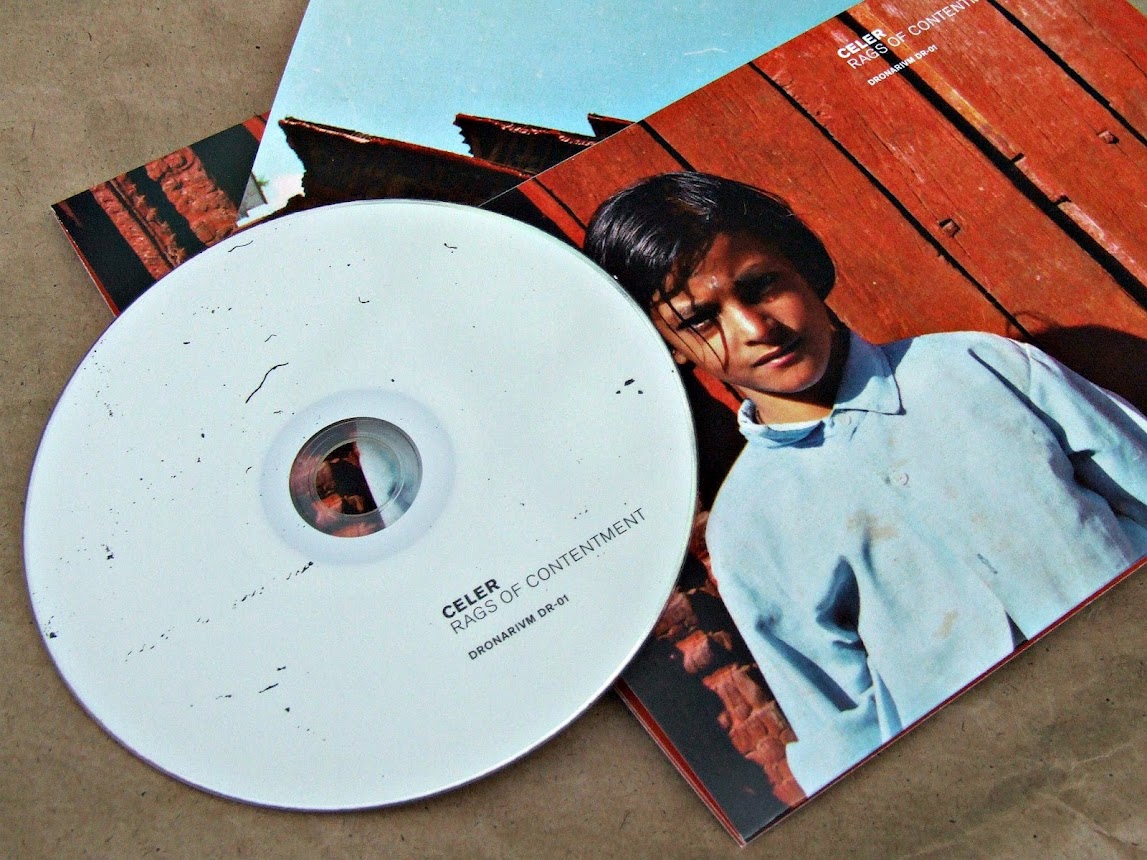
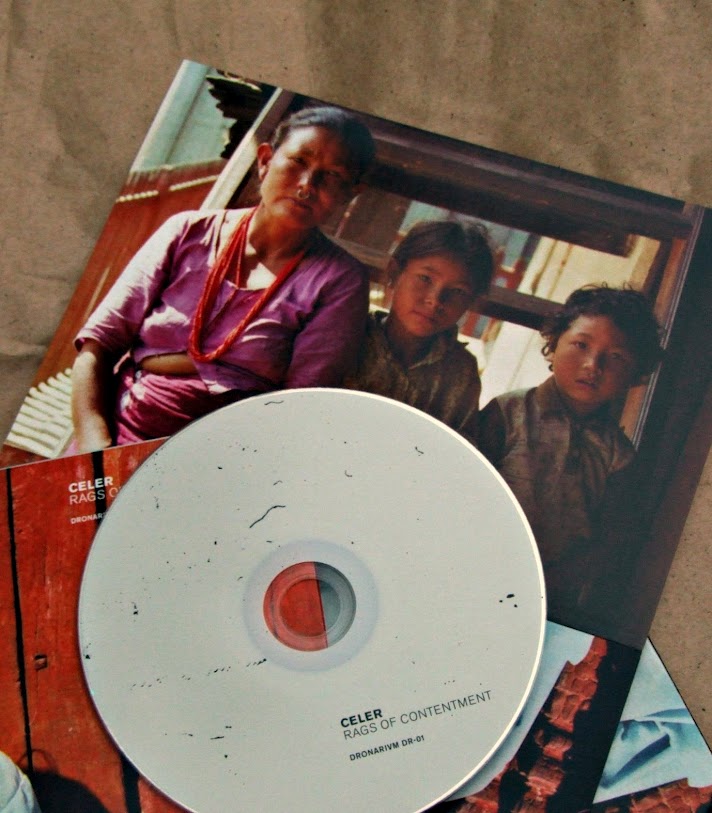
Now available for the first time on CD in an edition of 222 copies as the inaugural release of DRONARIVM, it includes photography by Danielle Baquet-Long, and design by Rutger Zuydervelt (Machinefabriek).

Available here

A feel-good sense of liberty rises in the air of Lightness & Irresponsibility, exhaling a state of tranquility that is just as irresponsible and free of care as a delightful breeze playing in abandon. As this irresponsibility, this innocence in music and in play, stirs upon our face, so too does Celer stir creamy, sublime textures of ambience, releasing them into the air where they may fall with grace. Lightness & Irresponsibility is the iridescent brilliance of a gorgeously lit afternoon, one where the hours may unfurl in their own delayed irresponsibility, sleepily, to the relaxed passing of the day. It’s an afternoon that may only feel like seconds, until a change in the light is observed.

Just as these days remain long after they have departed, the sedate feelings experienced when listening to Celer’s music may also remain, if they would like to. They needn’t ask. The shy nature of the music creates an introverted circle of contentment and joy, surrounded by drones so sublime they become almost heart-wrenching, glinting soft, prismatic rainbows that illuminate whoever may listen.

Celer’s ambience remains in a constant motion despite the minimal nature of the two pieces gracing the album, and Will Long’s prolific rate and output of music doesn’t seem to limit him in scope or result in a decreased level of quality, as he is seemingly capable of releasing freshly-scented ambient flavours with every new musical endeavour and without any sign of risk. Lightness & Irresponsibilityis possibly one of Celer’s quietest releases. It is also a stand-out in terms of utterly gorgeous texture, only just rising above a hush on the breeze and straying close to the ground without ever displaying a desire to go higher; it’s fine where it is. Will Long’s ambience is now completely refined, perhaps more clearly and deliberately than any other release in his past, and he continues to display a complete understanding of the drone and its artistry. It is clear that Long is an artist with not only the experience and the maturity to effectively calm, nurture and slowly soak his ambient textures; he also has the feel of ambient music down, in that he never demands attention. There is a level of care in the music that reveals a love for the style, and of ambient textural development. The music remains introverted and shy, and yet still captures the heart.

Lightness & Irresponsibility may feature an increase of quiet reservation due to its Japanese setting. Recorded in Tokyo, the drones which hover have an air of Japanese civility, politely circling around a single pitch with a respect for their development and a courtesy towards their environment of Japanese grace. The drones remain understated, while gently rising currents of lower drones add a depth, resembling a concealed intensity underneath still waters. On the surface, the pitch never seems to stray, and this is the ultimate beauty of the music.

Lightness & Irresponsibility is both heart-crushing and uplifting, and a beautiful paradox of freedom and tonal confinement. Lighthearted, Long’s ambience is freed from any underlying, deeper drones which may enforce the restrictions of gravity. Long, too, is playful over the running length of forty-two minutes, but he maintains a precise devotion to the drone throughout the two pieces. Lightness & Irresponsibility may also be Long’s most subdued musical work. Just as thin as the breeze, the music is light enough to be knocked permanently off course at the slightest touch. Airy drones lift free in a playful dance, just skimming the surface. Like a thin mist, they hover in a pre-summer haze, settling in a period where spring is not quite done and summer is not quite ready.

Celer’s drones lay under a creamy sky, where white clouds drift as slowly as the music on a hazy afternoon. The two pieces share similar tones, but are entirely different. What makes this more of an ambient skill is that Long maintains an interest throughout the music, even though the changes which occur require splashes of patience; something which a seasoned ambient listener will no doubt have in abundance.

Celer’s daze of irresponsibility opens “An Unforced Cheerfulness”, as delicate and as beautiful as a falling blossom, where colours of cherry and vanilla fall in unison until they are cushioned by descent’s end upon reaching the ground. Mysterious traces enter inside the music, leaving perfect circles of interest for the listener and keeping everything fresh. Organ-deep, the drones may change to an unexpected, darker tone, slightly lifting the veil of innocents’ illusion. Finally, after their fall, the drones revolve around their tonal center until the desired resolution is reached. It acts as a reminder that a slight change is all that is needed to turn the atmosphere cloudier and cooler. ”Involuntary Impromptu” depicts the playful nature of the drones, a loving chase played out over silent thoughts. The drones feel thin, yet they are fragile enough to exist and appreciate, and the whole piece shines like the sun glinting off an airplane’s wing of dull metal.

Anything that has slipped away was something that was previously clasped, even if it was just for a second.  Music by its very nature is playful; she wants to run care-free in the late afternoon light, around the seasonal haze which separates late spring and early summer. This light is a beautiful one, and Celer’s music is at the heart of it; a sublime, blossoming light that remains forever attractive.

Link

Per Will Thomas Long, l’esile respiro ambientale delle sue composizioni non esaurisce lo spettro delle finalità ad esse sotteso. Ne aveva dato prova, da ultimo, in “Epicentral Examples Of The More Or Less“, nel quale si affacciavano sorprendenti sferzate ritmiche, e lo conferma su una scala ancora più ampia nel corposo “Redness + Perplexity”, poco meno di ottanta minuti di musica ripartita in cinque tracce.

In ”Redness + Perplexity” le tinte della musica di Long si fanno, appunto, colorate e sfaccettate come non mai, pur mantenendo nel proprio substrato quel soffio ipnotico costante e raffinato che caratterizza gran parte delle numerose decine di pubblicazioni a nome Celer. Ci sono le dense stratificazioni del brano iniziale, poi sfocianti in sciabordii sintetico, la pallida quiete inframezzata da field recordings della seconda traccia e le disturbanti saturazioni rumoriste della terza, così come le brillanti scie di tastiere della quarta (la più breve, anche nel titolo: “Sharp Sequel”).

Discorso a parte merita il monolite finale di oltre tre quarti d’ora “A Less-Abrupt, Multi-Colored (But Faded) Ending”, che ripiega sulla forma pura di una quiete decompressa, eppure come sempre prodiga di input neuronali e fragili modulazioni emozionali. Un ideale ritorno al conforto di un (quasi-)silenzio cullante dopo le divagazioni che nei brani precedenti sembravano esservi state semplicemente sovrapposte.

Link

I was invited by Somehow Recordings to participate in making a track to match an image for the Fogbound compilation. It will be released on September 25th, in an edition of 75 copies only. Other artists are Chihei Hatakeyama, Hakobune, Porya Hatami, Darren Harper, Tomoyoshi Date, and A Bleeding Star. You can hear my track ‘Wind that can’t move wire’ here. The compilation can be ordered directly from Somehow Recordings.