Format: 2CD, 3LP
Label: Two Acorns
Catalog: 2A37
Release date: 3/17/26
Track list:
1 Mouthfeels Of Capreae
2 Polaroid Family Portrait
3 Unequal Temperament
4 Unequal Temperament
5 A Pause
6 An Erne Of A Sigh
7 Falling In Trickles
8 With Ice, Anent The Steam
9 We Missed You Favonian
10 Listen To The Inverted Sounds, Falling
11 Op.0
12 Is Lands
13 Red Elements
14 I Slow For Love
15 Bracelets Passed To Spanish Hands
16 Paired Plateaus
17 When Ice Makes You Weep
18 Transposing Piano
19 Cheek To Ice
20 Swimming, And Belief
21 In Characteristic Form
22 Transcribe This Pas
23 Late Retrospection, Mourning Rain
24 Still Running
25 In A Past Of Haze, These Beaches
26 I’ve Got My Love To Keep Me Warm
27 Sonata For Dual, Unaccompanied Piano
28 Push Me This Way
29 Craven Gardens
30 Lint White
31 Anacapri
32 Symtolomny
33 Lists Of Sycophants And Wishing
34 A Return By Looking Back
35 Rich Telescopes
36 A Sorted Ending
Press text:
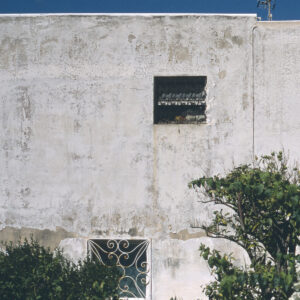
Originally released in 2009, Capri is a concept album composed of fragmented vignettes, lost minutes and scenes from an idyllic imagining. A collection of brief moments, suspended shimmers, and frail settings, Capri was never meant to be more than its own thin veneer; a naked and subtle wash of saturated and semi-transparent colors, rolling as gently as ocean waves against rocky beaches, of fading afternoon sunlight, of momentary experience. Peaceful yet isolated, quiet yet collapsing, they are fading moments without definite borders, directions, or conclusion.
Remastered by Stephan Mathieu from the original tapes, and expanded to include the complete recordings excluded from the 2009 CD edition, this collection is finally present in its complete form in the deluxe edition as a black vinyl 3xLP, and 2CD. All music by Danielle Baquet and Will Long, 2007-2008.
Press reviews:
Musique Machine
Originally released in 2009, Capri features the prolific act when it was a duo, before Danielle Baquet-Long tragically passed later that year. Light drones create ambient vignettes of nature’s ephemeral moments, what we take in daily, not realizing that their impermanence forms the solid foundations of our being. Much of the original material was left off of the 2009 CD release, but Two Acorns and Stephan Mathiew have remastered and released the entirety of the original tapes, expanding this to its complete 2xLP/2CD glory. On the surface, the thirty-six tracks may seem daunting, but their brevity and transience linger on in the background of one’s mind, subtly processing subconsciously, getting the body and soul ready for Capri‘s inevitable next playthrough.
Capri feels like a fog, slowly rolling in, loosely shrouding all, but never inhibiting motion or affecting the structures around. Like the impermanence at the center of the album, these periods of experience and interaction are fleeting, like the fog, but somehow their brevity can build moments that will last lifetimes. A perfect summer sunset, while a quick occurrence, can stick with the viewer forever or inspire a poem that can last beyond the viewer’s years. These experiences become something entirely new inside the mind, free from the physicality of the world, and take on a bigger, more permanent place in the viewer’s world. Capri does this with sound, sofly moving, covering, retreating, and floating by, its soft drones moving from piece to piece effortlessly, like fog, a cloud, or like a sheet of lace slowly pulled by a lover. Filling space but still full of space, there is a transparency allowing mental imagery to form within, giving the listener a glimpse into their own recollection. What images do these pieces conjure? How do they make you feel? Like Plato’s cave, it’s not the vision/experience itself that stirs in our minds, but the form of the vision/experience as a memory. Changed from a physical occurrence to an electrical construct in the mind, these are prone to distortion over time, and depending on its base, a change in feeling. A beautiful sunset that was inspirational may be shifted to disdain if it were viewed with an ex-lover, or the scent of the beach as the waves crash may be a bad reminder of getting sick as life goes along. None of this is expressed by Celer, but the ethereal quality of the ambient drones that swirl on Capri gives the listener more than enough time to hear, experience, and internalize what is coming through the speakers.
Seventeen years is an interesting point for a reissue, but given the material, one understands that time is relative, so why worry about a specific period. The main thing here is that Capri is given a deluxe edition, allowing Celer’s wonderful work to be even further appreciated, and hopefully hitting an even bigger audience. Available on 3XLP, 2CD, or digitally, one can experience Capri in a number of ways, allowing the soft ambience to take hold wherever and however the listener sees fit.
Chain D.L.K.
When Celer released “Capri” in 2009, ambient music was already crowded with artists trying to evoke places they had never quite visited, memories they may never have had, and sunsets that somehow lasted forty-seven minutes. Yet even within that landscape, “Capri” felt unusual. Not because it was grand, but because it was so deliberately small.
Now reissued in a remastered and expanded deluxe edition by Two Acorns, with mastering from the ever-sensitive ears of Stephan Mathieu and the restoration of material omitted from the original CD, “Capri” emerges not as a forgotten relic but as a completed sketchbook. It remains one of the most delicate works created by the original duo of Will Long and Danielle Baquet, whose partnership defined the project’s formative years before Baquet’s untimely passing in 2009.
To call “Capri” a concept album is technically accurate, though it risks suggesting narrative coherence. This is not an album that tells a story. It behaves more like a box of postcards found in a drawer decades later, each image disconnected from the next, yet somehow contributing to a larger emotional geography. The Capri of the title is less a destination than a state of perception: sea air translated into texture, sunlight dissolved into memory, architecture reduced to atmosphere.
The brevity of the pieces is crucial. Many ambient records stretch ideas toward infinity, often mistaking duration for profundity. “Capri” does the opposite. Thirty-six miniature compositions drift by in fragments, some barely lasting a minute, refusing to settle into permanence. They appear, shimmer softly, and disappear before the listener can fully grasp them. Like trying to remember a dream while simultaneously waking up and searching for your glasses.
Tracks such as “Mouthfeels Of Capreae”, “Polaroid Family Portrait”, and “Ascensionaires” establish the album’s peculiar language. Piano traces emerge and recede beneath soft drones, environmental echoes, and tape-like imperfections. Nothing insists on being noticed. Everything seems content to exist at the edge of perception.
Throughout the record, Long and Baquet demonstrate an extraordinary understanding of negative space. Silence is not merely an absence between sounds; it becomes a compositional material in itself. Pieces such as “A Pause” and “Op.0” function almost like breaths between thoughts, creating the sensation that the album is remembering itself as it unfolds.
There is also a fascinating tension between warmth and dissolution. “Red Elements” and “Lint White” are among the longer pieces, allowing motifs to linger slightly longer before fading into ambiguity. Yet even these tracks avoid emotional certainty. The music remains suspended between comfort and melancholy, between presence and disappearance. The listener is never entirely sure whether they are arriving somewhere or leaving it.
That ambiguity has become one of Celer’s defining artistic virtues. Across an enormous discography, Will Long has often explored themes of impermanence, distance and memory, but “Capri” captures those concerns in unusually concentrated form. Knowing the historical context inevitably adds another layer. Recorded during the final years of the original duo’s collaboration, the album now feels almost prophetic in its preoccupation with fleeting moments and vanishing traces. Not tragic, exactly, but deeply aware of transience.
The remastering serves this material beautifully. Rather than modernizing it, Mathieu reveals additional depth within its fragile architecture. The sounds breathe more freely; subtle details emerge without disturbing the original intimacy. The expanded running order also strengthens the album’s identity as a collection of interconnected vignettes rather than a conventional sequence of tracks.
What remains most striking, however, is how little “Capri” demands from its audience. In an age where even ambient music occasionally feels compelled to announce its significance with conceptual manifestos and cinematic ambitions, this album remains content to whisper. It trusts the listener to meet it halfway.
Seventeen years after its original release, “Capri” still resembles sunlight reflecting off water: impossible to hold, impossible to examine directly for long, yet somehow unforgettable. It is a work of remarkable modesty, one that understands a rare artistic truth: sometimes the most enduring impressions are left not by monuments, but by passing shadows on a summer afternoon.
HHV Mag
Capri ist ein seltsamer Ort – eine Insel von ewiger Schönheit, die für die meisten Menschen nur vorübergehend zugänglich ist. Danielle Baquet und Will Long widmeten in ihrer Arbeit als Celer klanglichen Ambivalenzen und atmosphärischen Zwischenzuständen besondere Aufmerksamkeit, weshalb es nur logisch scheint, dass sie diesem Ort ein ganzes Album widmeten. Capri erschien im Februar 2009, fünf Monate vor Baquets frühem Tod aufgrund eines Herzversagens, und wurde 2012 von Long als erweiterte Version mit 37 Titeln digital neu veröffentlicht. Nun hat Long diese erweiterte – es fehlt lediglich das Stück »Others World« – und neu gemasterte Version erstmals auf Vinyl gepresst.
Baquet und Long waren ein hochproduktives Duo, hatten aber immer die Ruhe weg. Feldaufnahmen sowie Aufzeichnungen der beiden am Klavier, an Bläsern, an der Akustikgitarre, an Streich- und anderen Instrumenten bildeten für sie das Rohmaterial für einen rigorosen Arbeitsprozess, in dem die Ursprünge der Klänge verschleiert wurden und sie zu dröhnenden, schimmernden Ambient-Klanglandschaften mutierten. Capri hingegen besteht größtenteils aus – relativ gesprochen – kürzeren Stücken, von denen einige die konkreten Klänge des Ausgangsmaterials nicht komplett dem emotionalen Abstraktionsprozess opfern, der das Schaffen des Duos prägte.
Das ist nur angemessen angesichts einer Insel, die sich gleichermaßen lebendig und gespenstisch anfühlt und die ganz wie diese Musik sowohl die Sinne anspricht, wie sie diffuse Gefühle weckt. Zeitlose, ortlose Musik.
Brainwashed
First issued back in 2009 as the inaugural release from Berlin’s short-lived Humming Conch label, Capri is one of the more polarizing highlights from the project’s early years, as it is a bit of a stylistic outlier. While released the same year as Danielle Baquet-Long’s untimely passing, these pieces feel like a ghostly and gently psychotropic transmission from a much happier time, as Will and Dani recorded this album in a single room over a series of summer nights during a residency on the Mediterranean island of Capri. Assembled using a modest yet eclectic palette of organetto, piano, strings, horns, acoustic guitar, and Dani’s field recordings from the island, the album is billed as a concept album/”idyllic imagining” collaged from “fragmented vignettes, brief moments, and suspended shimmers” and it certainly delivers on that promise, as it primarily resembles a series of brief and hallucinatory mirages. Given that, Capri feels very much like a languorous and impressionistic haze of shifting moods and scenes rather than a batch of substantial compositions, but these pieces cumulatively cast quite a mesmerizing and unique spell.
This expanded edition of Capri is its first physical reissue since its initial release, but I believe most of the added pieces previously surfaced digitally back in 2012 after Stephan Mathieu remastered the album for an intended triple LP release that was reluctantly abandoned due to high production costs. After a decade-plus delay, however, those triple LP dreams have finally been realized (along with a double CD format) and this new incarnation includes seven pieces that had to be cut from the original CD due to time restrictions.
Until now, I was only familiar with Capri‘s original incarnation, so roughly a quarter of the album was entirely new to me. While a few of the those previously absent pieces (“Falling in Trickles” and “Swimming, and Belief”) admittedly rank among the album’s strongest moments, the bulk of Capri can be reasonably described as variations on just a couple of themes, so the inclusion of additional material is less about the merits of any individual pieces than it is about restoring a whole to its intended shape and sustaining the album’s beguiling durational spell a bit longer (though I will note that the remastering has certainly improved the album as well).
In a rough sense, there are essentially two different types of pieces on Capri: shimmering and unsettling organ drones and slow-motion, reverb-soaked piano reveries like “Bracelets Passed To Spanish Hands.” Many of the pieces tend to be quite brief as well, so the album is essentially a series of moody, dreamlike, and ephemeral vignettes that evoke a heat haze of sensory impressions like island breezes, “decayed dwellings set against pristine resorts, and the deep colors of the Blue Grotto.” Filtered through Celer’s sensibility, an island primarily known for its stunning natural beauty, extravagant hotels, and luxury boutique shopping is transformed into a mysterious, haunted, and subtly unsettling dreamstate of flickering beauty mingled with shadowy and unsettling dissonances.
The latter is perhaps exemplified by the gently oscillating hum of “Listen To the Inverted Sounds, Falling,” which feels like tendrils of an enchanted fog drifting in through an open sea-side window, but my favorite piece is probably the elegantly pulsing and shimmering heaven of the all-too-brief “Ascensionaires.” In general, however, the true beauty and magic of Capri lies in how the album feels like an abstract and immersive yet ephemeral and elusive travel diary in which images and memories teasingly flicker and shimmer into being for a delicious instant only to quickly dissolve back into dream-mist again. As such, Capri is something of a fascinating unicorn within Celer’s vast discography, as it does not necessarily rank among their top-tier releases, yet still feels like one of the project’s more essential statements due to its uniquely bleary sense of disorienting unreality, unusual structure, and vivid evocation of a specific time and place that can never be recaptured.